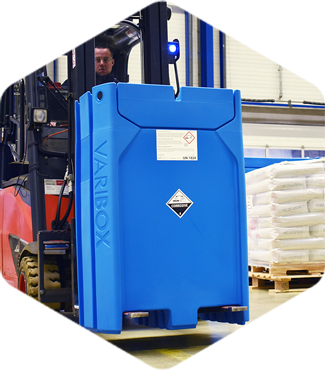
Smarter chemical logistics with connected IBCs
Efficiency. Safety. Cost control. Reliable deliveries. Sustainability. For companies in the chemical sector, these are not abstract ambitions, but daily operating conditions.

Smarter chemical logistics with connected IBCs
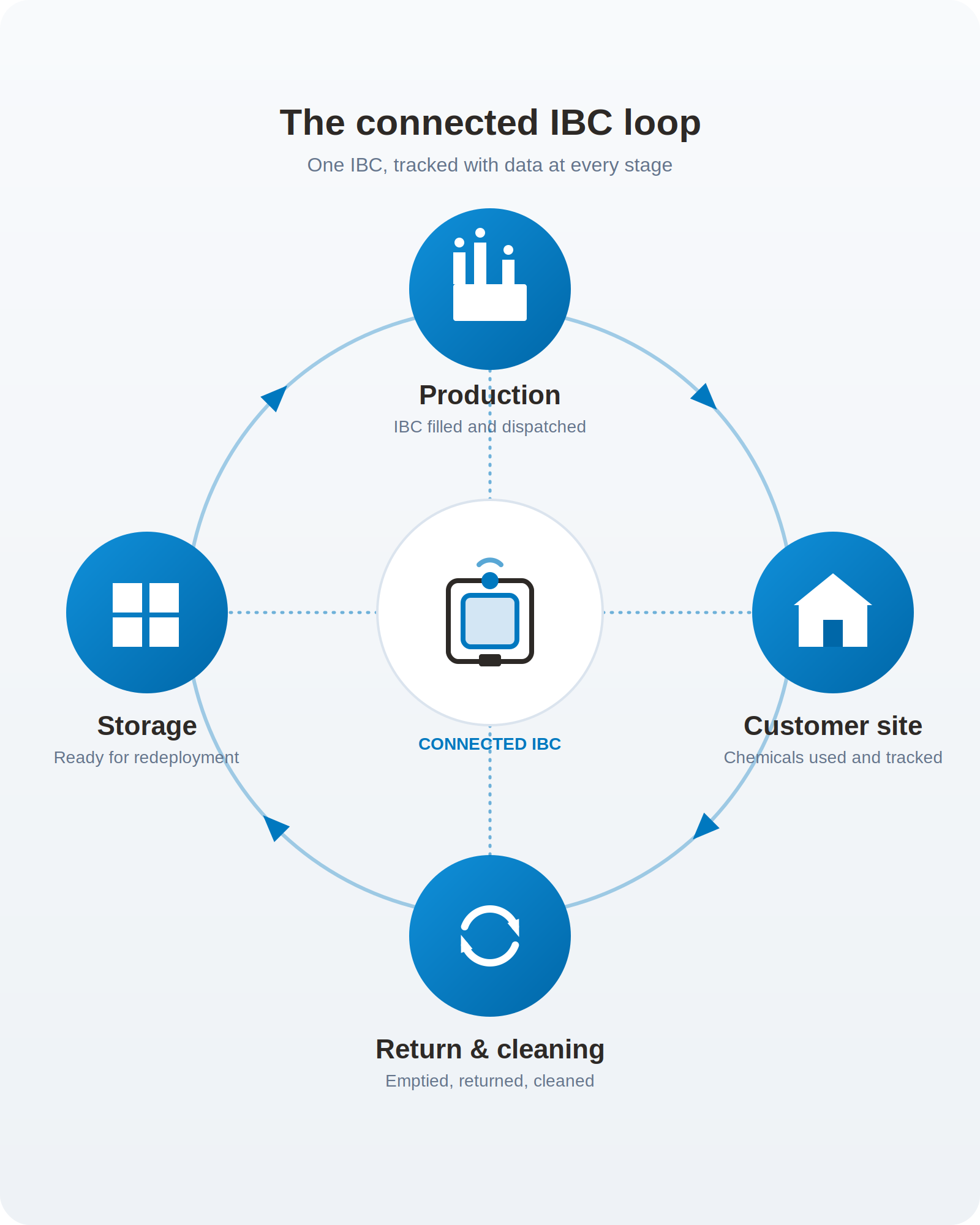
Efficiency. Safety. Cost control. Reliable deliveries. Sustainability. For companies in the chemical sector, these are not abstract ambitions, but daily operating conditions. Chemical products move through complex logistics chains: from production to storage, from filling to customer site, from use to return, cleaning and redeployment. The IBC plays a central role in that chain. In this whitepaper, we explore the barriers chemical companies face in managing their IBC flows. We also show how the combination of VARIBOX as a high-quality reusable IBC and Pack AI Connect+ as a smart monitoring solution creates new possibilities for safer, more efficient and more sustainable asset management.

Safer

Reusable

Sustainable
1. Why chemical logistics requires more than tracking alone
In the chemical sector, an IBC is not just a means of transport. It is at the same time packaging, an inventory point, a part of the process and a reusable business asset. An incorrect estimate of content, location or availability has a direct impact on planning, production, customer service and compliance.
Chemical logistics flows face specific challenges:
- Assets spread across customers, depots, production sites and cleaning facilities
- Long dwell times at end users
- Insufficient visibility into remaining content and empty notifications
- Manual checks and administrative corrections
- Unnecessary trips for half-full or not-yet-empty IBCs
- Limited data for reuse, circularity and reporting
- Higher requirements for safety, material suitability and traceability
Where traditional tracking mainly answers the question “where is my packaging?”, the chemical sector calls for a broader question: “what is happening to my packaging, my product and my logistics process?”
2. Data silos are holding back efficient IBC flows
Many companies do have data, but not the right overall picture. Transport information sits with the carrier. Order information is in the ERP system. Stock levels are in spreadsheets. Return notifications arrive by email. Cleaning status sits with an external partner. And the actual fill level? That often only becomes clear after a manual check.
This creates three structural bottlenecks.
1. Unnecessary transport movements
Without reliable fill-level data, IBCs are sometimes collected too early, returned too late, or unnecessarily included in planning. An IBC that is still half full calls for a different logistics decision than an IBC that is actually empty.
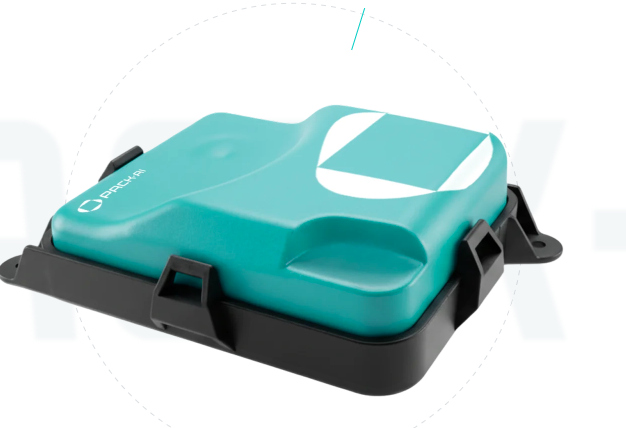
Pack AI enables accurate radar-based fill-level measurements. The sensor can measure up to six times a day and sends a daily fill-level update to the platform. Based on the fill-level trend, users can estimate when an IBC will run empty, so that transport, returns and cleaning can be planned more effectively.
2. Too much capital tied up in assets
When it is unclear where IBCs are located or when they will come back, companies often build up safety stocks. That may seem practical, but it leads to extra investment in packaging, more space usage and lower asset rotation.
With real-time insight into location, fill level, temperature and usage, companies can deploy their IBC fleet more efficiently and achieve the same logistics capacity with fewer assets.
3. Limited basis for reporting and improvement
New legislation, customer requests and sustainability targets are increasing the need for reliable data on reuse, circularity and transport efficiency. Pack AI supports reporting on reuse, circularity and PPWR preparation.
Pack AI Connect+ combines sensor hardware, data communication, a software platform and service in a single solution. The sensor measures, among other things, location, fill level, temperature, movement and battery status, and makes this data available through a secure online environment.
3. The combination of Pack AI and VARIBOX: smart packaging, smart data
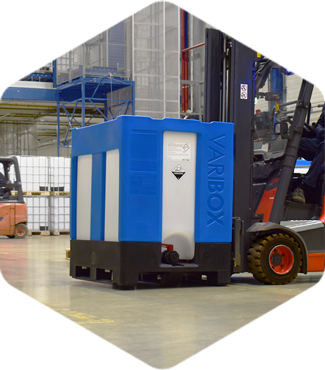
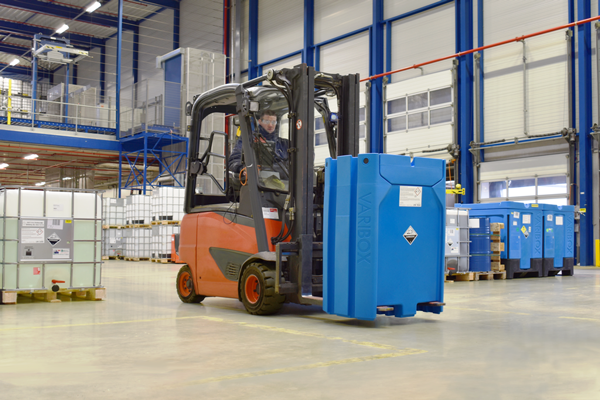
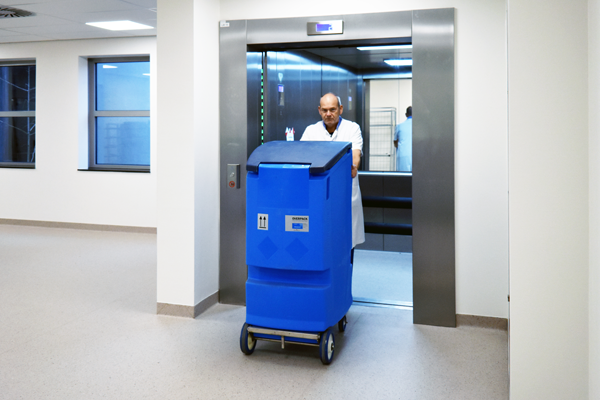
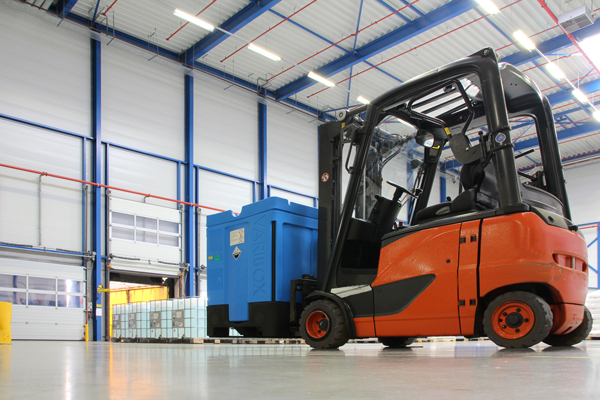
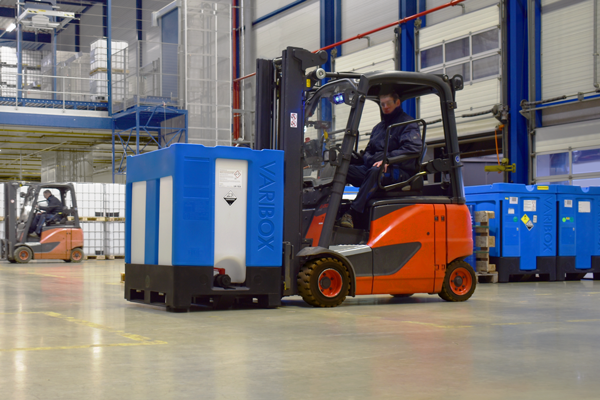
Safe and efficient chemical logistics starts with reliable packaging. VARIBOX develops and manufactures reusable IBCs specifically designed for intensive use in, among others, the chemicals and cleaning products industry. Safety, reusability and sustainability are central to this. Thanks to the closed system, minimal residual content after emptying and a service life of up to ten years, VARIBOX IBCs combine safety, reusability and sustainability in a single solution.
By combining these robust containers with Pack AI’s digital technology, a solution emerges that goes beyond managing packaging alone. Where VARIBOX provides a safe, reliable and sustainable physical carrier, Pack AI adds real-time insight into location, usage, content and deviations within the supply chain.
This combination helps organisations not only manage their IBC pool more efficiently, but also plan logistics processes better, make optimal use of assets and respond more quickly to deviations. The result is a connected reusable packaging solution in which packaging and data reinforce each other.
For companies in the chemicals and cleaning products sector, this means, among other things:
- Safety as a starting point. The closed system reduces the risk of contact with the chemical product during transport, storage and use. Measurement takes place from the outside, making it suitable for safe monitoring of a wide range of product flows.
- Developed for intensive use. VARIBOX containers are designed for a wide range of chemical applications and deliver reliable performance, even under demanding conditions.
- Maximum reusability. Thanks to the robust design, easy cleaning and a service life of up to ten years, the IBCs are designed for long-term, circular use.
- Ergonomic handling. The design supports safe and comfortable handling and contributes to reliable day-to-day logistics processes.
- Insight through data. With Pack AI, location, deployment, turnaround speed and deviations become visible, giving organisations greater control over their packaging flows.
- More sustainable supply chains. The combination of reusable packaging and data-driven asset management supports a longer asset lifespan, more efficient use of packaging and a further step towards a circular supply chain.
By combining physical reliability with digital intelligence, a future-proof solution emerges for organisations that want safety, sustainability and operational efficiency to go hand in hand.
4. How connected IBCs help chemical companies improve
1. More control over location and availability
A chemical supply chain is often geographically dispersed. IBCs are located at customers, are transported by external parties, are awaiting cleaning, or are located in places where GPS is not always reliably available.
Connect+ uses smart positioning via GPS/QZSS, including indoor location tracking via Wi-Fi. This provides better insight into where assets are located, even in places where traditional GPS is less reliable.
2. Better planning based on fill level
The actual fill level is one of the most valuable data points in chemical logistics. Not the planned delivery date, but actual consumption determines when an IBC can be collected, replaced or refilled.
With radar-based fill-level measurement, temperature measurement at every reading, and Pack AI helps companies make just-in-time decisions about return, cleaning and replenishment.
3. Less product loss and fewer deviations
For chemical products, unusual usage, unwanted movement, impact or temperature changes can be directly relevant. Connect+ records movement and free fall. Temperature data is also linked to fill-level measurements.
This gives companies better signals in the event of deviations. Not to monitor every movement, but to take targeted action when the data calls for it.
4. Lower operational costs
Better data leads to better decisions. Fewer manual checks. Less searching. Less emergency transport. Fewer unnecessary trips. Less discussion about where an IBC ended up or when it was empty.
Through the Pack AI platform, users have access to dashboards, reports and up-to-date asset data. This makes asset management less dependent on scattered spreadsheets, phone calls and assumptions.

5. A stronger basis for sustainability and compliance
Sustainability in chemical logistics starts not only with choosing reusable packaging. It also requires measurable reuse, efficient return flows and the reduction of unnecessary transport movements.
Pack AI supports organisations with better planning, fewer unnecessary transport movements and preparation for reporting obligations relating to reuse and the PPWR.
In addition, Connect+ has a RoHS and REACH declaration of conformity. According to this declaration, Connect+ complies with RoHS Directive 2011/65/EU and REACH Regulation EC 1907/2006, with no SVHC substances present above 0.1% w/w based on supplier data and test reports.
5. European PPWR legislation increases pressure on packaging flows
The European Packaging and Packaging Waste Regulation, or PPWR, is changing the way companies must look at packaging. Where packaging was long assessed mainly on cost, availability and practical usability, the focus is now shifting towards demonstrable reusability, recyclability, material use, waste reduction and reporting.
The PPWR entered into force on 11 February 2025 and most provisions will apply from 12 August 2026. The regulation replaces the existing Packaging and Packaging Waste Directive and harmonises packaging rules within the European Union.
This is particularly relevant for companies in the chemical sector. Chemical products are often transported, stored and used in industrial packaging such as IBCs. It is precisely in these flows that reuse, return logistics, cleaning, safety, asset availability and documentation play an increasingly important role.
Among other things, the PPWR introduces requirements to make all packaging recyclable by 2030 at the latest, to limit the use of unnecessary packaging, to encourage more reusable options and to make circularity more measurable. For transport packaging, reuse also becomes a more important starting point: according to the EUR-Lex summary, 40% of transport packaging must be reusable by 2030, with an aspirational target of 70% by 2040.
For reusable packaging, this means that companies must not only have reusable packaging, but also systems and processes that make reuse demonstrable. Operators using reusable packaging must participate in reuse systems and ensure that packaging is repaired or made fit for use before it is redeployed.
In practice, this means that companies must be better able to demonstrate:
- how many reusable packaging units are in circulation;
- where this packaging is located;
- how often it is used;
- when it comes back;
- whether it is redeployable, empty, cleaned or available;
- how reuse contributes to less waste and more efficient logistics.
As a result, data is no longer a nice-to-have, but a precondition for future-proof packaging management.
From regulatory compliance to operational advantage
For many companies, new legislation initially feels like an extra administrative burden. Yet the PPWR also offers an opportunity. Companies that invest now in better insight into their IBC flows are building not only compliance, but also more efficient logistics.
With Pack AI Connect+, companies can collect data on location, fill level, temperature, movement, usage cycles and battery status. This data is made available through an online platform and supports better planning, fewer manual checks and better asset management.
This creates a practical bridge between regulation and operations for chemical companies. The same data needed for better reporting also helps improve day-to-day decisions: when should an IBC be collected, when is it empty, where is it located, and how quickly can it be redeployed?
Pack AI explicitly positions this as support for reuse, circularity and PPWR preparation. The Pack AI brochure states that the software supports reporting on reuse, circularity and the PPWR.
Why this is relevant to the combination of VARIBOX and Pack AI
The PPWR calls for packaging that is not only technically reusable, but also fits within a manageable return and reuse system. That is where the strength of the VARIBOX and Pack AI combination lies.
VARIBOX provides the physical foundation: a reusable IBC solution for professional industrial and chemical applications.
Pack AI adds the digital layer: insight into location, content, usage, movement, temperature and availability.
Together, they help companies transition from viewing packaging as a cost item to viewing it as a managed, measurable and reusable asset.
That is exactly what the PPWR is driving towards: less waste, more reuse and better-substantiated circularity.
6. From reactive management to predictive logistics
Many IBC processes today are still reactive. A customer reports that an IBC is empty. A planner follows up by phone. A driver receives an assignment. A cleaner waits for supply. A manufacturer is short of assets for new orders.
Connected IBCs enable a different way of working. By structurally monitoring location, fill level and usage patterns, companies can better predict when an IBC will run empty, where return capacity is needed and which assets are ready for redeployment.
This opens the door to:
- Timely replenishment based on consumption
- Just-in-time return planning
- Smarter route combinations
- Better coordination with cleaning and requalification
- Fewer rush orders and safety stocks
- Higher asset rotation
- Better customer service
The technology doesn’t need to feel complex. The value lies precisely in simplifying everyday decisions: which IBC needs attention, where is it, and what is the best next action?
7. Independent data insights without losing control
For chemical companies, data is sensitive. Locations, volumes, product flows and customer patterns must be carefully protected. That is why it is important that digitalisation does not mean companies lose control over their data.
Pack AI makes data available through a secure online environment. The Connect+ sensor collects, among other things, location, temperature, shocks, fill level, usage cycle and battery status. The service agreement states that Pack AI uses the data to carry out the assignment and improve its services.
For this whitepaper, this translates into a clear message: smart supply chains require data, but trust remains the foundation.
8. Practical use cases for the chemical sector
Use case 1: Fewer trips through fill-level-driven return planning
A supplier no longer plans returns at fixed intervals, but based on actual emptiness. IBCs are only collected when it makes sense. This reduces transport costs and prevents half-full packaging from being moved unnecessarily.
Use case 2: Better availability of IBCs for production
Continuous insight into location and expected availability allows planning to better estimate when assets will return. This reduces the need for extra buffer stock.
Use case 3: Fewer manual checks at customers and depots
Employees need to physically check how much product remains less often. The data is available via the platform and app, including local readout via the Bluetooth service interface.
Use case 4: Faster detection of deviations
Movement, tilting, vibration and free fall can be recorded. This helps detect unexpected events during storage, transport or use.
Use case 5: Substantiating circularity and reuse reporting
Combining reusable IBCs with data-driven asset management creates a stronger basis for reporting on deployment, reuse and logistics efficiency.
9. What companies should pay attention to during implementation
A connected IBC solution requires not only technology, but also clear process choices. The key questions in advance:
- Which logistics pain point do we want to solve first?
- Which data is necessary for planning, service and compliance?
- Who uses the data: sales, planning, customer service, supply chain, QHSE or finance?
- How are notifications followed up?
- Which KPIs define success: fewer trips, higher rotation, lower inventory, less loss, or better customer satisfaction?
- How do we integrate these insights into existing processes and systems?
The best implementations start small but are designed to scale. For example, with one product flow, one customer group or one region. The approach can then be expanded to broader logistics networks.
10. The combined value proposition
The combination of VARIBOX and Pack AI offers chemical companies an integrated approach to reusable packaging:
VARIBOX provides the physical foundation: a robust, reusable IBC solution for professional chemical applications.
Pack AI adds the digital layer: location, fill level, temperature, movement, usage data, dashboards and reporting.
Together, they make it possible not only to use IBCs, but to actively manage them as strategic assets.
The core message:
Fewer assumptions. More insight. Better logistics decisions. Lower operational waste. And a stronger foundation for sustainable growth in chemical supply chains.
11. Conclusion
The chemical sector faces a dual challenge. On the one hand, companies need to organise their logistics flows more efficiently, safely and cost-effectively. On the other hand, European legislation, including the PPWR, calls for demonstrably more sustainable packaging use, more reuse and better reporting.
The combination of VARIBOX and Pack AI helps companies achieve both goals at the same time. VARIBOX offers a robust, reusable IBC solution. Pack AI makes visible where those IBCs are located, how they are used, when they are empty and how they can be deployed more intelligently.
This creates a practical foundation for future-proof chemical logistics: fewer assumptions, less waste, better use of assets and greater control over compliance.
Not by adding extra complexity, but by making usable the data that is already embedded in the chain.
Check out our Intermediate Bulk Containers
We provide packaging for chemical distribution that excels in safety, reusability, and sustainability.
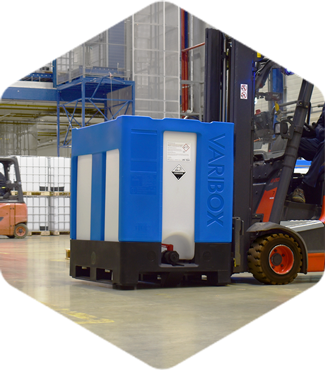
VARIBOX
Single Containment
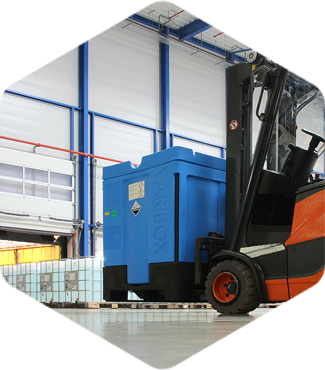
VARIBOX
Full Containment